




Diagnosis of Automotive A/C Compressors: What Equipment a Service Center Needs Today
An automotive air conditioner has long ceased to be just a “comfort” option. Today, it is an essential system that directly affects safety, as well as the well-being of the driver and passengers. For automotive service centers, climate systems are a stable source of workload during the warm season and an excellent opportunity to increase the average service ticket.
Spring and early summer are peak periods for customer requests related to non-functioning or poorly functioning air conditioning. However, a service center that begins preparing only during the season inevitably faces problems: lack of equipment, untrained staff, diagnostic errors, and loss of customers. That is why preparation for the A/C service season should begin in advance, not when a queue of customers is already waiting at the gate.
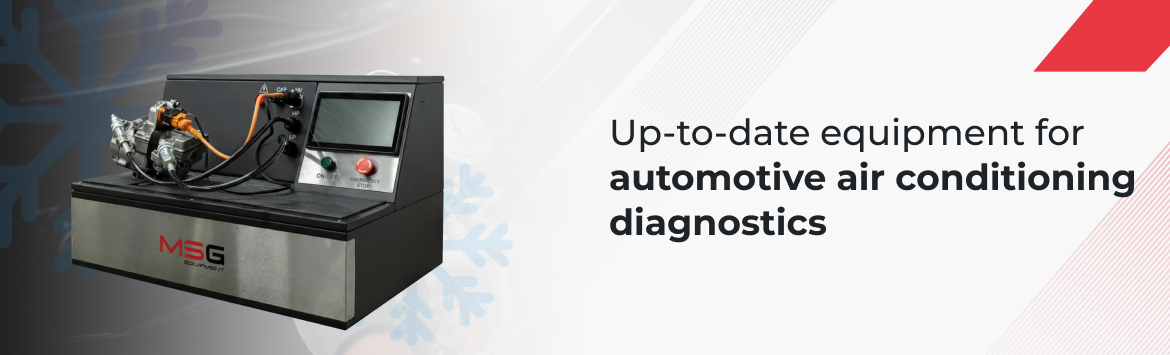
One of the key factors in successful work with automotive air conditioning systems is professional compressor diagnostics. In this article, we will review two diagnostic test benches, MS111 and MS112, which together cover almost the entire range of compressor diagnostics tasks.
MS111 — a universal solution for conventional automotive A/C systems
The MS111 test bench is designed for diagnosing any belt-driven mechanical compressors installed in most internal combustion engine (ICE) vehicles. It operates with R134a and R1234yf refrigerants and supports 12 V and 24 V power supply, making it fully relevant for the modern vehicle fleet. The test bench offers two diagnostic modes: automatic and manual.
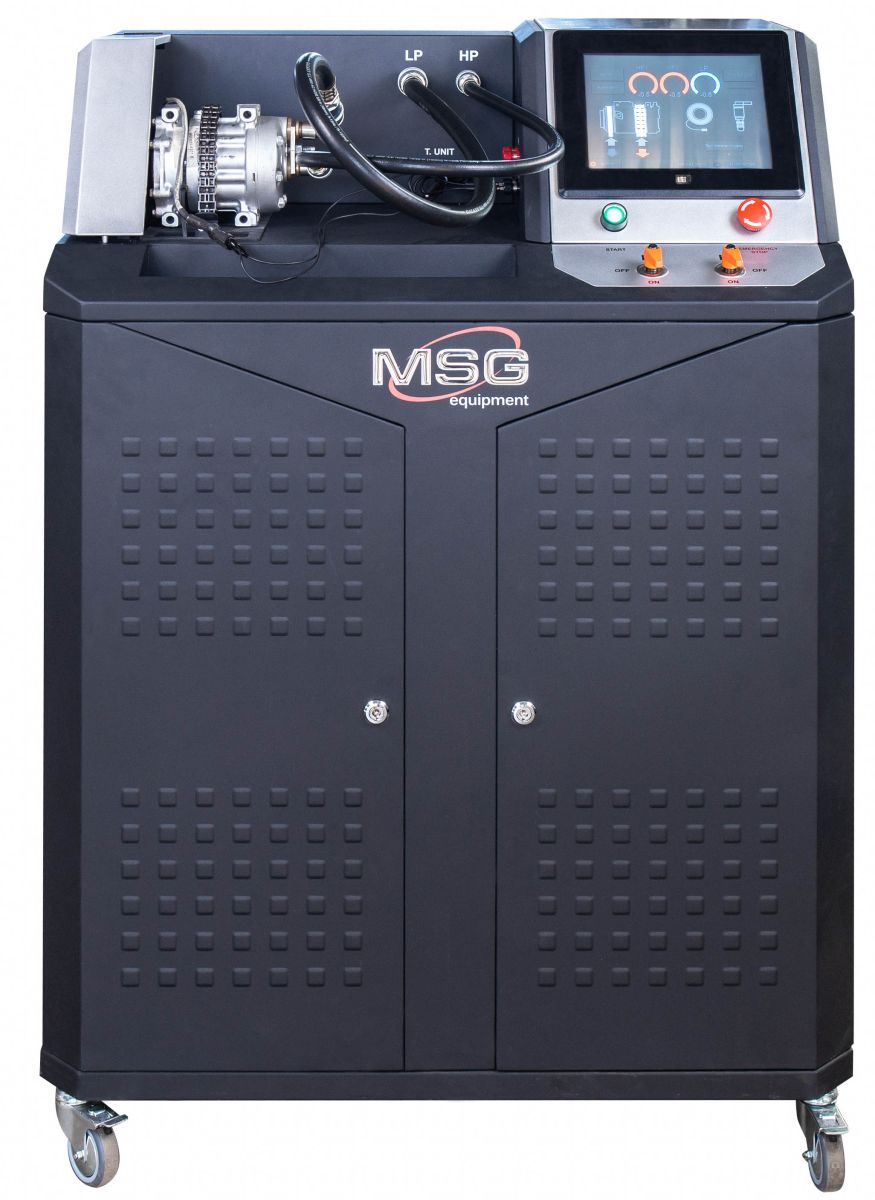
Additional MS111 capabilities include:
- separate testing of compressor components such as the electromagnetic clutch and control valve;
- compressor run-in after repair;
- pre-sale inspection of new aftermarket compressors;
- report generation with printing capability.
MS111 is an ideal choice for service centers working with ICE vehicles and aiming to bring A/C diagnostics to a professional level.
MS112 — an effective solution for electric and hybrid vehicles
The MS112 test bench is designed for diagnosing electric A/C compressors used in hybrid and electric vehicles. It tests any compressors with a built-in inverter and a power supply voltage from 200 to 400 V, as well as 48 V compressors when powered by an external power supply. The test bench provides a fully automated diagnostic process. After connecting the compressor, the system independently checks the electrical part of the compressor, evaluates the operation of the built-in inverter, and performs a performance test. This significantly reduces the human factor, speeds up the process, and improves diagnostic accuracy.
.jpg)
Compressed nitrogen is used in the MS112 as the working medium, which provides several important advantages compared to refrigerants:
- First of all, it ensures safety. Nitrogen is an inert and non-flammable gas, unlike many refrigerants, which reduces risks during diagnostics.
- In addition, nitrogen offers versatility and cost efficiency. The service center does not need to use different refrigerants for testing, and diagnostic costs are significantly reduced, as nitrogen is less expensive and does not require complex disposal.
- Environmental friendliness and ease of use are also important. Nitrogen does not harm the environment and is easier to store and handle.
As a result, diagnostics become safer, simpler, and more cost-effective without compromising accuracy.
MS112 provides a strong competitive advantage for service centers that want to work with electric vehicles at a professional level rather than refuse such customers.
MS111 and MS112 — not competitors, but a logical combination
It is important to understand that MS111 and MS112 do not compete but complement each other. The first is focused on the mass market of ICE vehicles, while the second targets the rapidly growing segment of hybrids and electric vehicles. Having both test benches allows a service center to:
- service all types of compressors;
- confidently work with high-value components;
- increase customer trust through accurate diagnostics;
- minimize the risk of errors and unnecessary replacements.
Training — the key to fast equipment payback
Even the most advanced equipment will not deliver results without trained specialists. That is why a 4-day training course on the diagnosis and repair of mechanical and electric A/C compressors is available.
During the training, specialists:
- study the operating principles of automotive climate systems;
- master diagnostics of both belt-driven and electric compressors;
- learn compressor disassembly and assembly;
- analyze typical faults and maintenance mistakes;
- work with modern diagnostic equipment.
After completing the course, specialists are ready to work independently and efficiently with automotive A/C systems of any complexity, and the new equipment starts generating profit from the first days.
Conclusion
The air conditioning season starts earlier than it seems. Now is the ideal time to invest in MS111 and MS112 diagnostic test benches, train staff, and be fully prepared for the flow of customers. Those who prepare in advance not only earn more but also build a strong reputation as a trusted and professional service provider.