




Brake Caliper Diagnostics: Comparison of MS300 and MS301 Test Benches
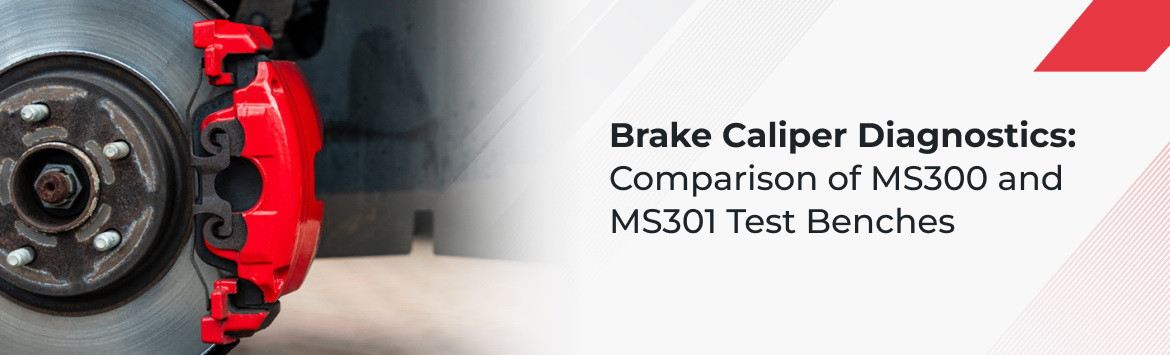
The brake caliper is one of the main components of a vehicle’s braking system. Its technical condition directly affects braking efficiency and vehicle safety.
The most common brake caliper failures include piston sticking, seal damage, cylinder corrosion, brake fluid leaks, and problems with the electromechanical parking brake. At the same time, some defects cannot be detected during a standard visual inspection. For this reason, specialized diagnostic test benches are used during brake caliper repair.
Why Brake Caliper Diagnostics Are Important
Professional brake caliper repair includes several mandatory stages:
- Disassembly of the unit.
- Cleaning of components.
- Inspection of the housing, piston, and guide pins.
- Replacement of worn components.
- Assembly of the unit.
- Checking caliper operation after assembly.
The final inspection after repair often determines the quality of the completed work. Without it, there is a risk of repeat customer visits and issues occurring after the unit has been installed on the vehicle. Therefore, a brake caliper testing bench becomes an important part of modern automotive workshop equipment.
MSG Equipment Test Benches for Brake Caliper Diagnostics
Among MSG Equipment solutions for brake caliper diagnostics, the MS300 and MS301 test benches can be highlighted. Despite their common purpose, these models are designed for different workshop tasks and operating formats.
Comparison of MS300 and MS301 Test Benches
The MS300 test bench allows diagnostics of passenger car brake calipers of various types and designs, including units equipped with an electromechanical parking brake (EPB). One of the key features of the MS300 is the combination of a diagnostic test bench and a full-fledged mechanic workstation. This layout allows disassembly, assembly, and testing of calipers in one place without moving the unit between different work areas.
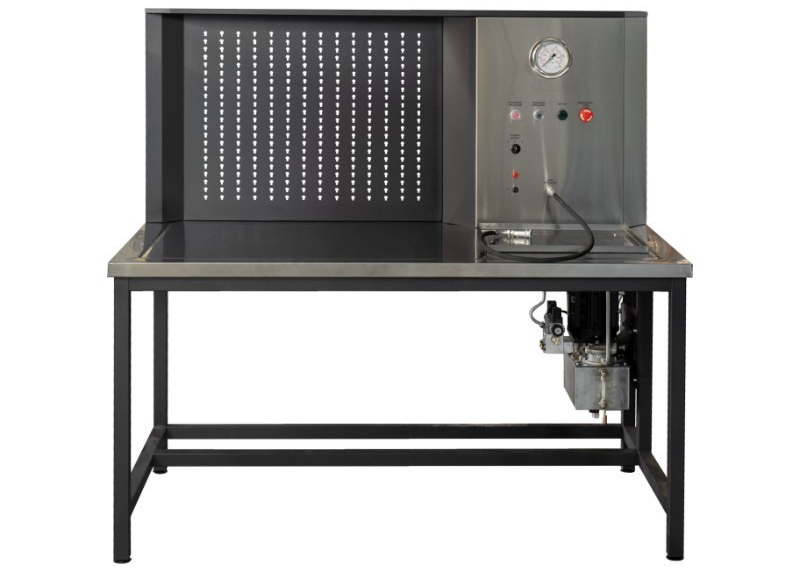
The perforated rear panel provides convenient placement of tools used during caliper repair. This simplifies workspace organization and makes the mechanic’s daily work more comfortable. The durable stainless steel worktop is designed for intensive use and is resistant to technical fluids. The test bench is equipped with a reusable working fluid system, which helps reduce fluid consumption.
MS300 can be especially useful for:
- Specialized caliper repair areas.
- Automotive workshops with a regular flow of such work.
- Organizing a dedicated full-fledged mechanic workstation.
- Working with various types of brake calipers, including EPB units.
Unlike the MS300, which serves as a full-fledged workstation for brake caliper repair and diagnostics, the MS301 is primarily focused on diagnostic operations – checking unit tightness. The MS301 is designed in a compact benchtop format and requires significantly less workspace. This approach makes the test bench a convenient solution for workshops that do not need a separate caliper repair area but require equipment for testing units after servicing or rebuilding.
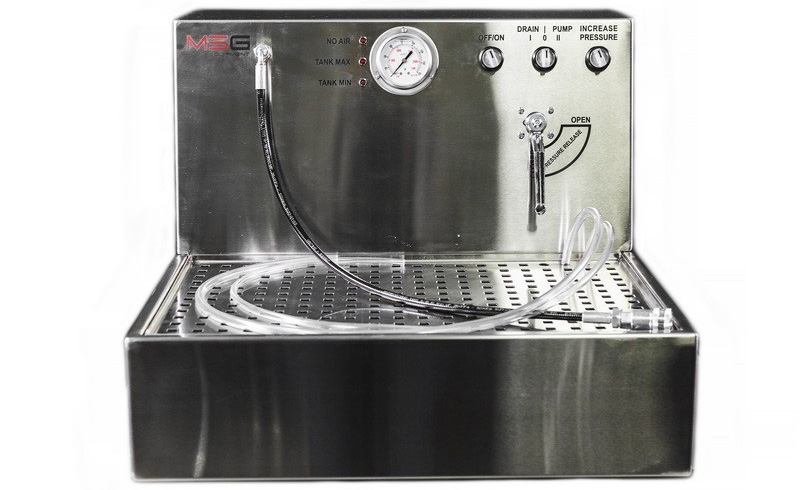
One of the key features of the MS301 is that it is designed to perform diagnostic operations with minimal operating costs. This is achieved through low power consumption from a 230 V power supply and low air consumption, allowing the test bench to operate using a household-level air compressor. The bench is also equipped with a reusable working fluid system. All this helps reduce operating costs.
Comparison Table of the Key Parameters of MS300 and MS301 Test Benches
| Parameter | MS300 | MS301 |
| Purpose | Diagnostics and repair | Diagnostics |
| Format | Full-fledged workstation | Benchtop |
| Support for EPB calipers | Yes | No |
| Power supply | 400 V three-phase power supply | 230 V single-phase power supply and compressed air |
Conclusion
The choice of a specific test bench depends on the workshop specialization, workload, and workflow organization requirements. At the same time, both test benches allow working with various types of hydraulic brake calipers for passenger cars and are supplied with a set of fittings for connecting units. In both cases, however, the use of professional equipment helps improve the quality of brake system repair and increase customer confidence in the automotive workshop.